
Midjourney’s Most Copied Artists & Brands Revealed In Study Of 5 Million Prompts
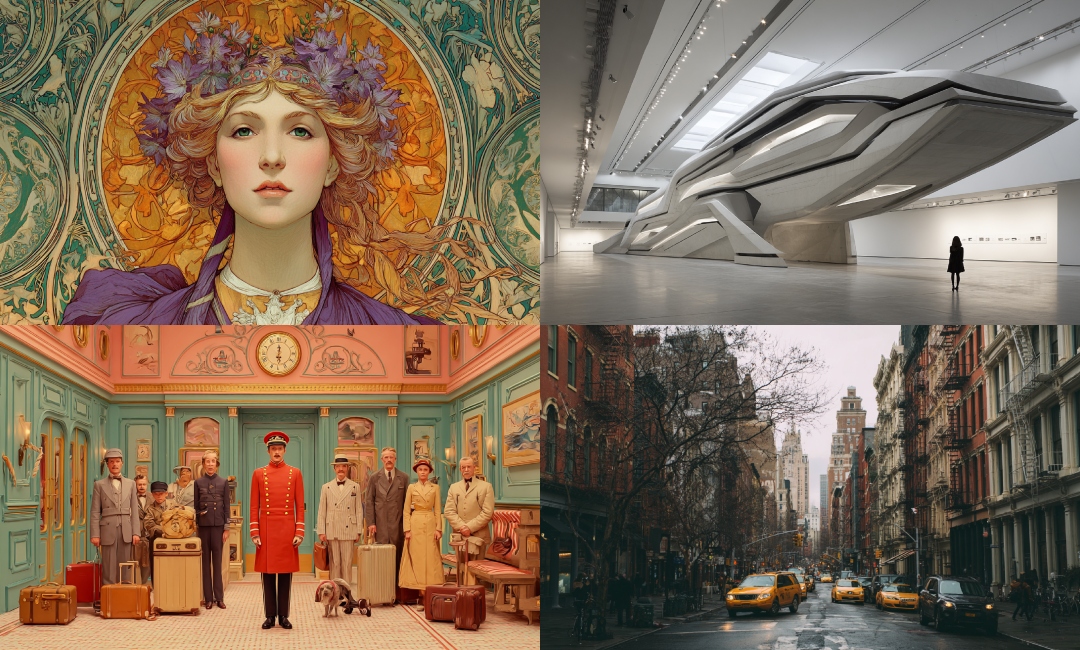
Images courtesy of Kapwing, featured with permission
What happens when millions of people ask a computer to “make” art? Online content creation platform Kapwing’s latest research into nearly five million Midjourney prompts uncovers which artists, architects, and pop-culture touchstones come up most. Turns out, names such as Alphonse Mucha, Wes Anderson, and Zaha Hadid are dominating the creative shorthand guiding AI art today.
At the top of the list sits Art Nouveau legend Alphonse Mucha, whose ornamental flair appeared in over 230,000 prompts. He’s followed by Dutch master Rembrandt and Leonardo da Vinci, proof that their timeless appeal transcends into the digital age.
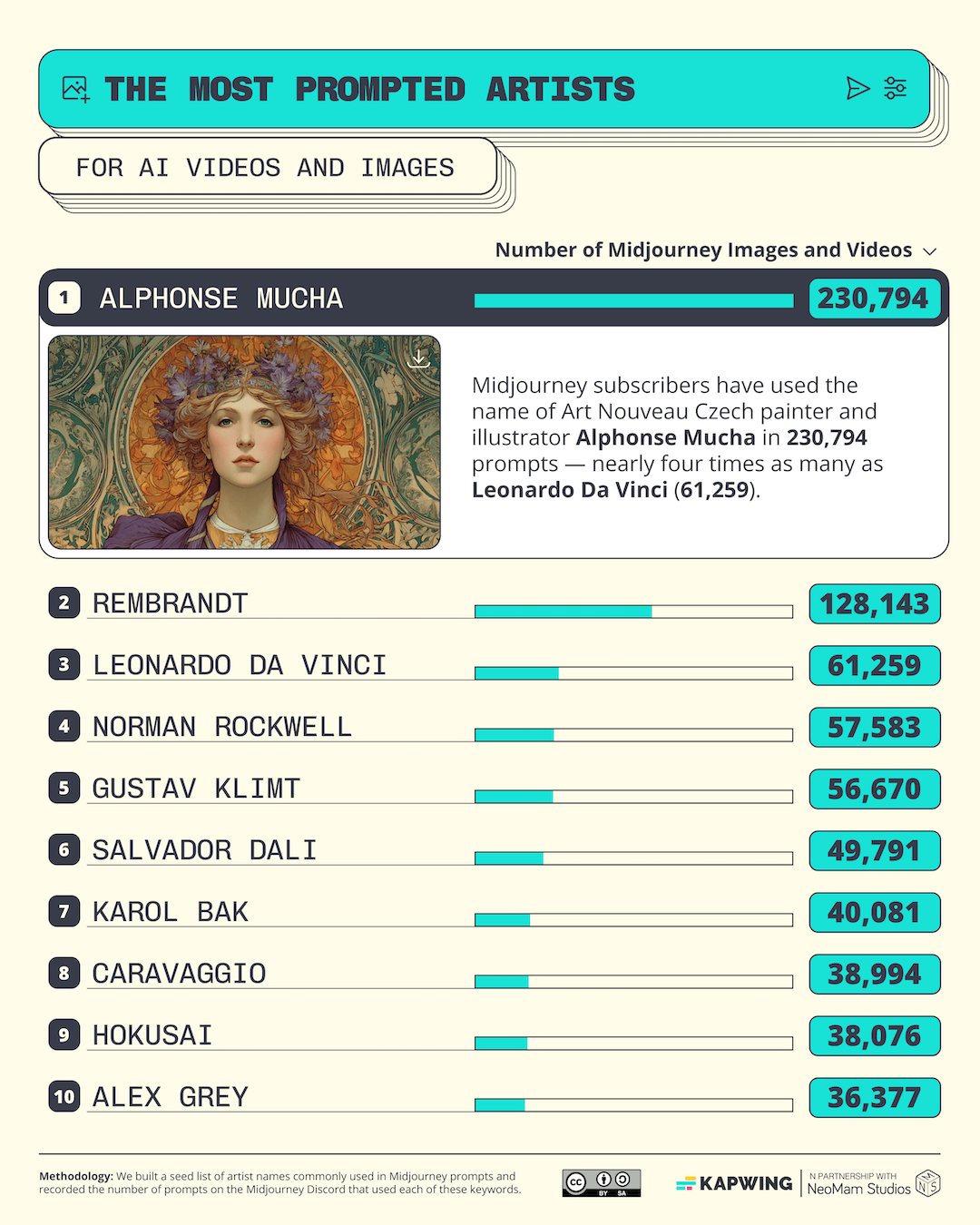
Image courtesy of Kapwing, featured with permission
Among illustrators, fantasy artist WLOP leads the pack with more than 166,000 mentions, ahead of Greg Rutkowski and Krenz Cushart.
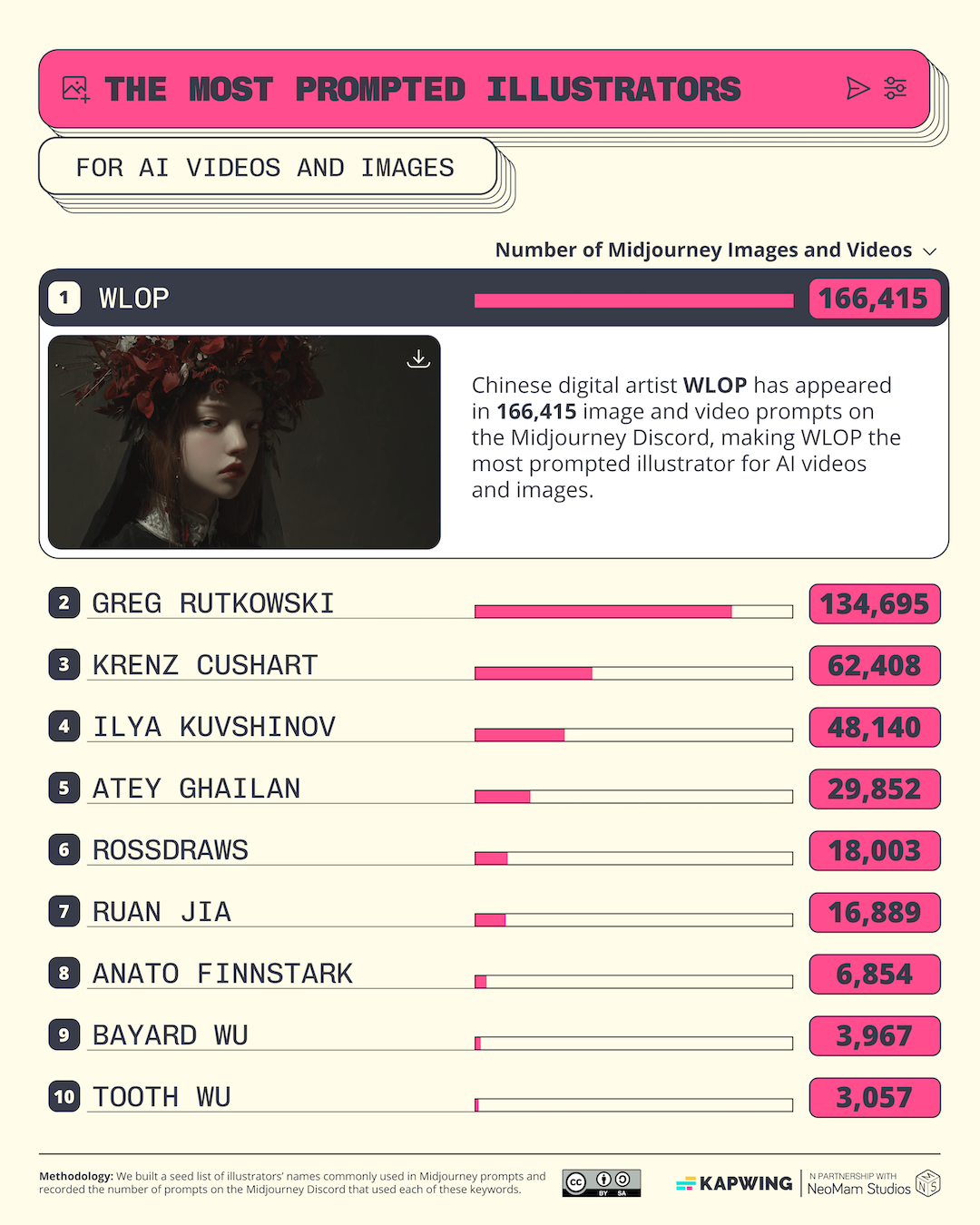
Image courtesy of Kapwing, featured with permission
Film buffs appear equally nostalgic: Wes Anderson’s pastel symmetry has inspired over 92,000 prompts, beating out Tim Burton and Christopher Nolan.
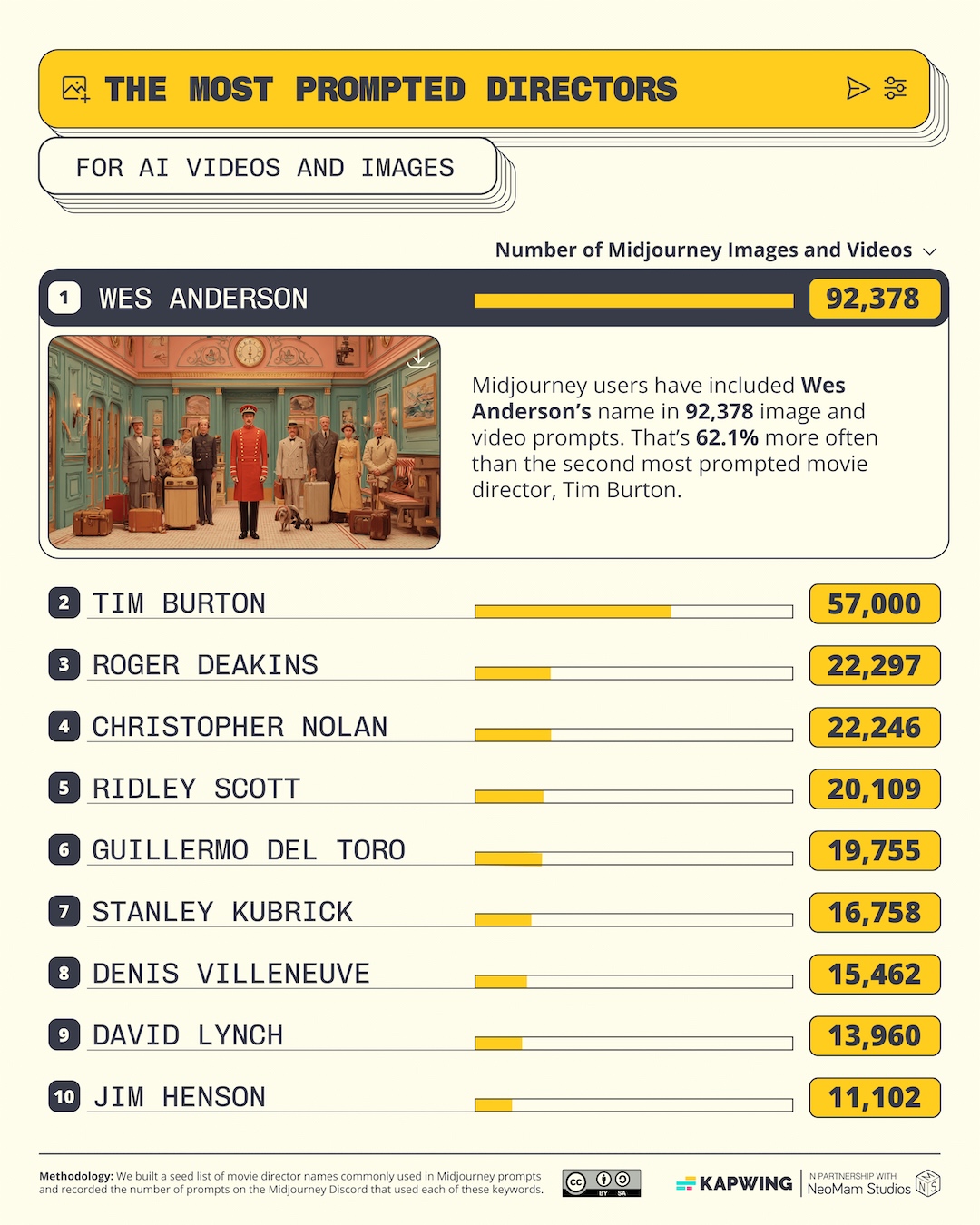
Image courtesy of Kapwing, featured with permission
Architecture also has its icons. Zaha Hadid, known for her sweeping, fluid structures, remains the go-to muse for AI users, cited in more than 63,000 prompts. In contrast, Frank Lloyd Wright and Tadao Ando follow far behind.
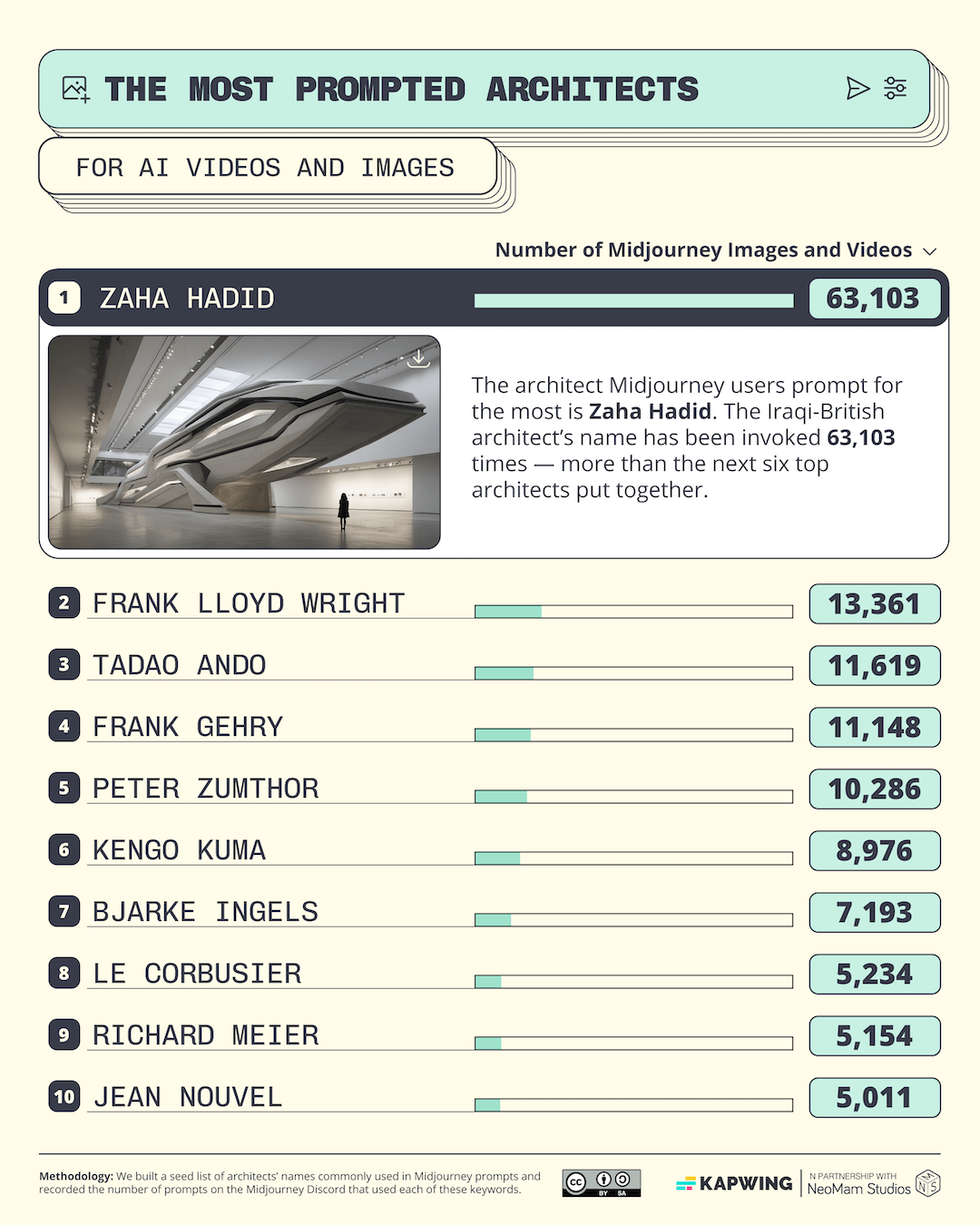
Image courtesy of Kapwing, featured with permission
As for setting the scene, New York dominates as the most prompted city, popping up in 156,000 AI-generated images and clips.
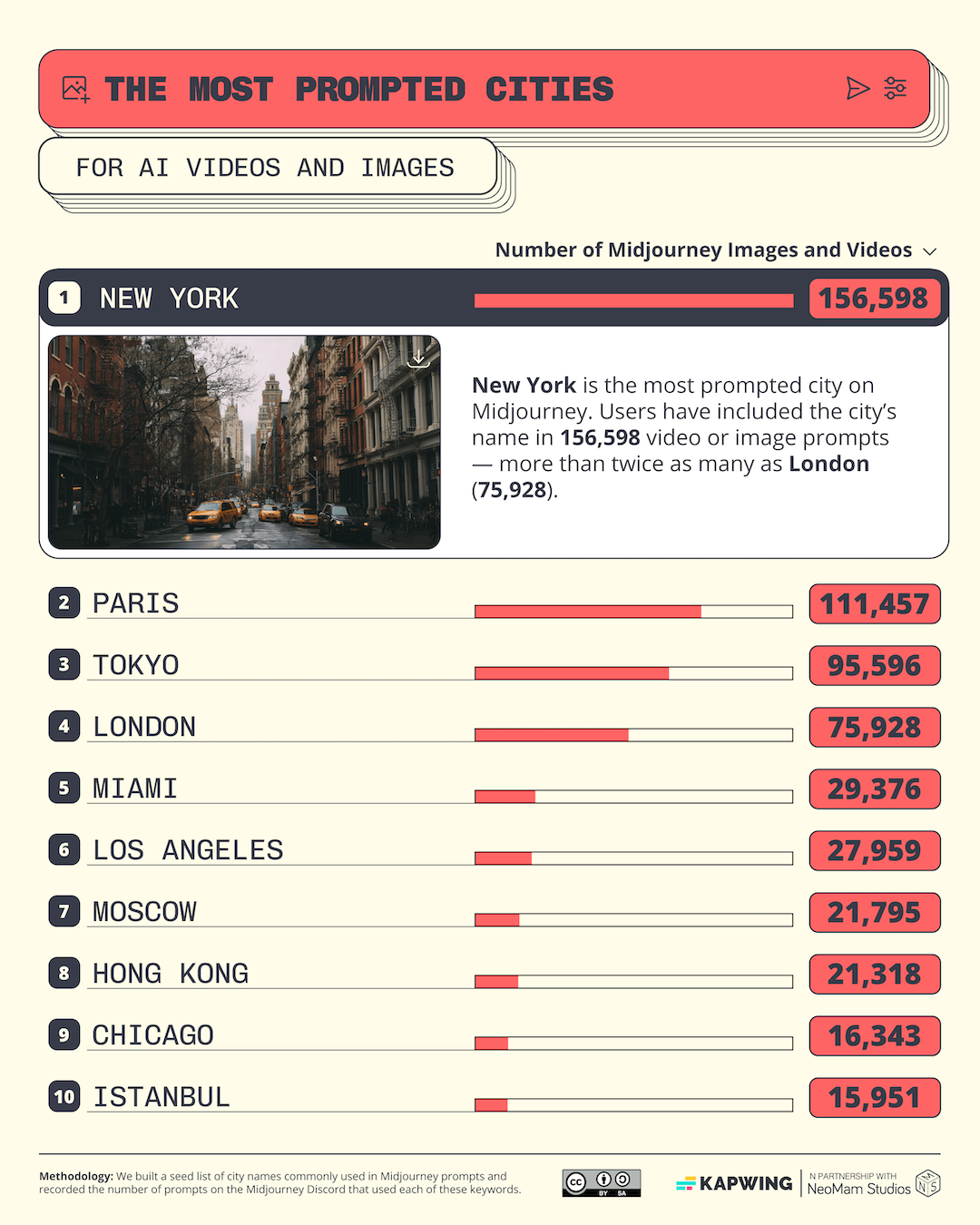
Image courtesy of Kapwing, featured with permission
Pop culture remains an inexhaustible source of ideas. Star Wars tops the franchise category with 160,000 mentions, while Akira leads the anime field, and McDonald’s reigns as the fast-food muse of choice, appearing in double the prompts of any rival chain.
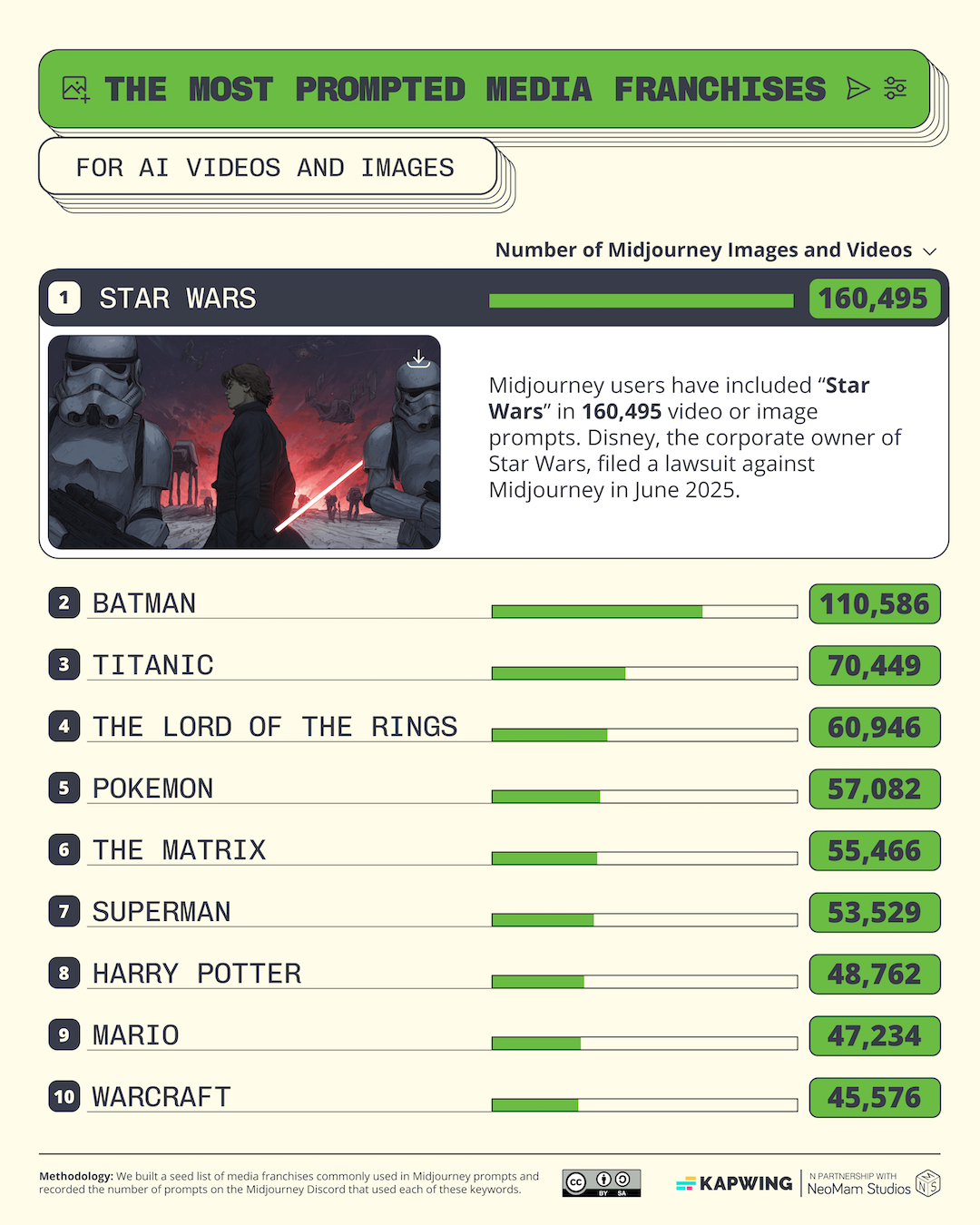
Image courtesy of Kapwing, featured with permission
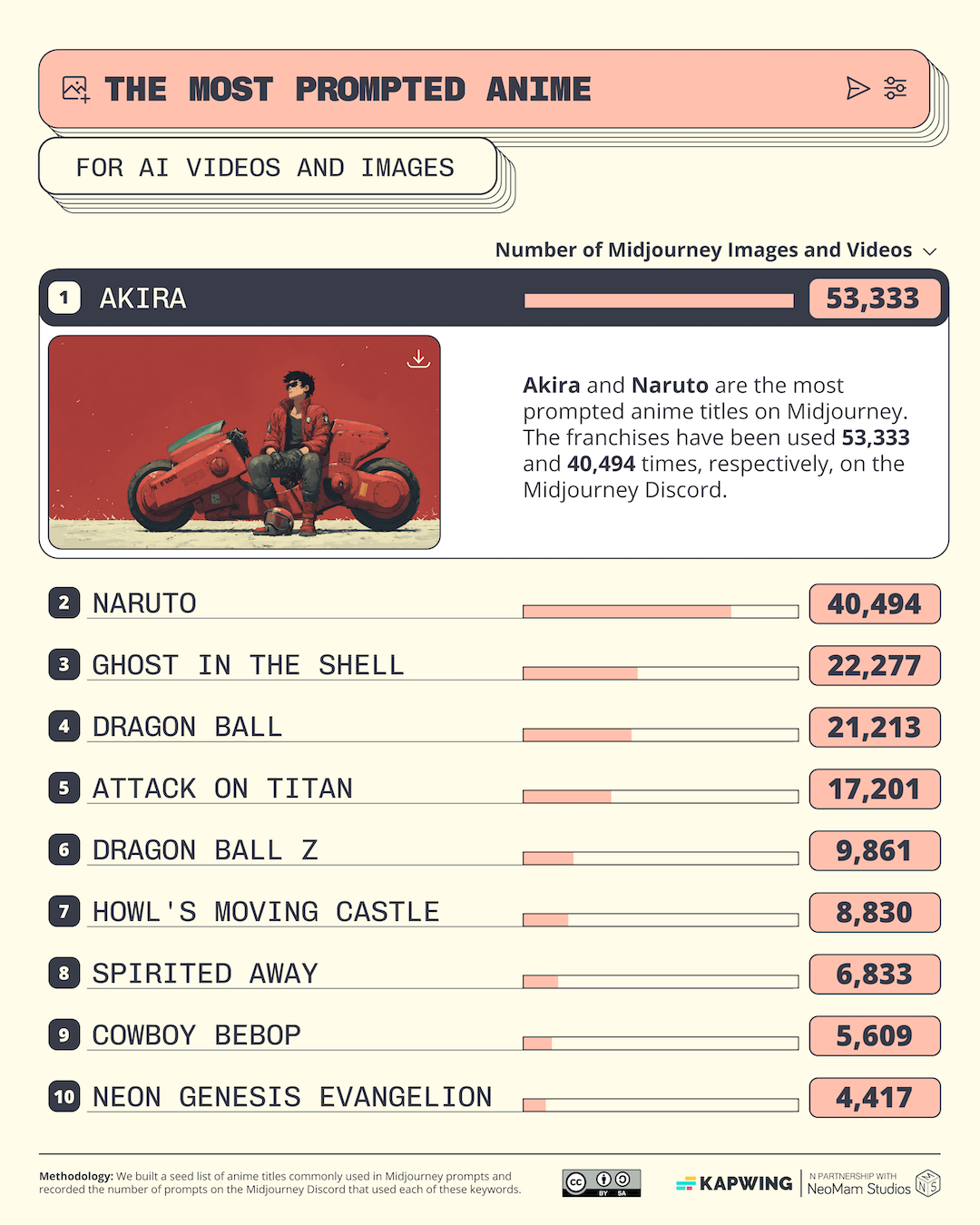
Image courtesy of Kapwing, featured with permission
Kapwing’s collaboration with NeoMam Studios mapped this sprawling dataset of 897 keywords across eight categories, from artists and directors to franchises and food brands. It shows that, while AI might generate new content, it still depends on human taste and memory, and users tend to anchor their prompts in well-known aesthetics.
Whether that’s a form of creative homage or uncredited borrowing remains a debate that’s far from over. Generative AI sits in a growingly murky space, borrowing visual DNA from artists who often never consented to its use. As tools like Midjourney and DALL-E spread, questions over copyright, authorship, and compensation continue to shadow their authority.
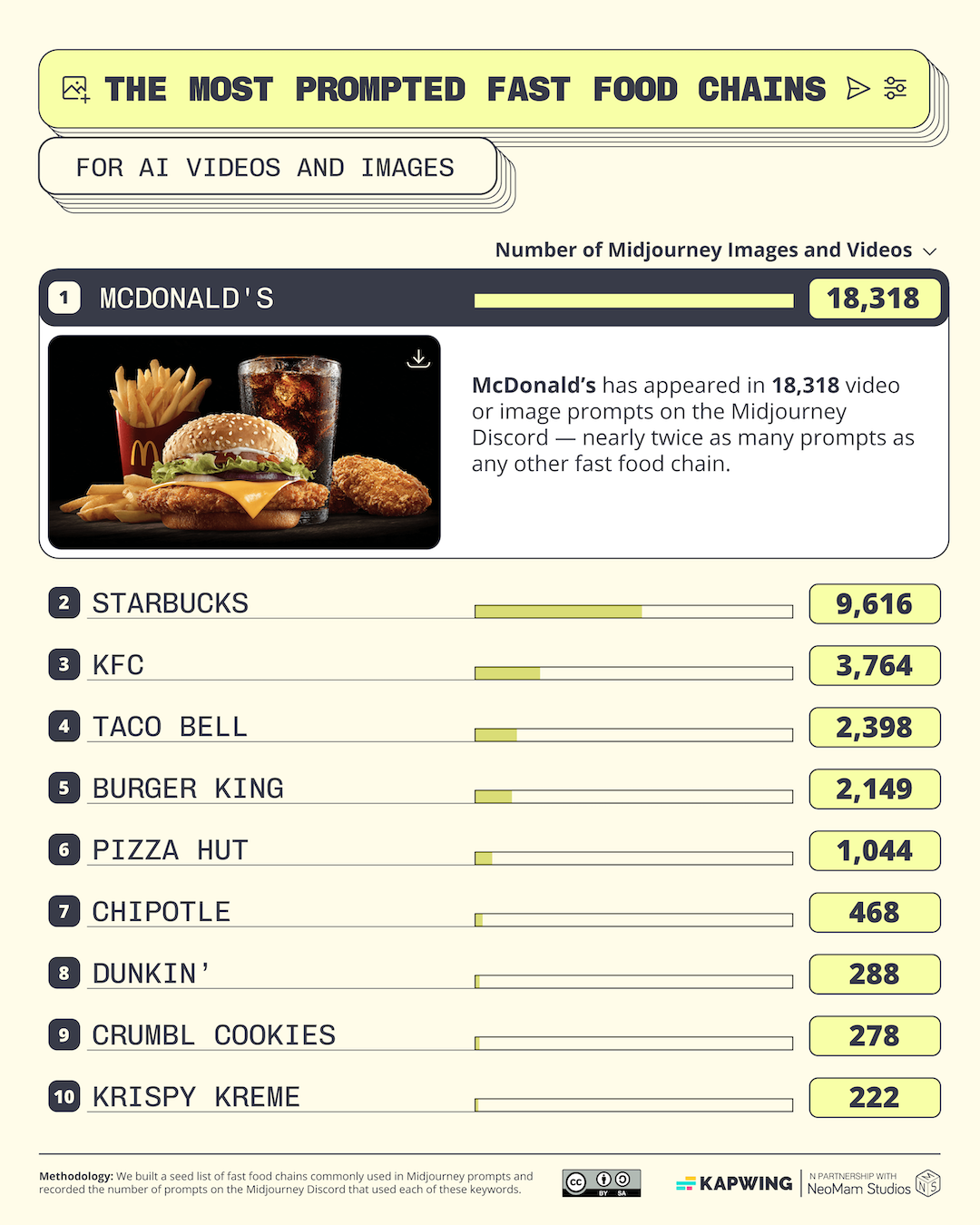
Image courtesy of Kapwing, featured with permission
[via Kapwing, images courtesy and featured with permission]


